Cape Canaveral, Florida
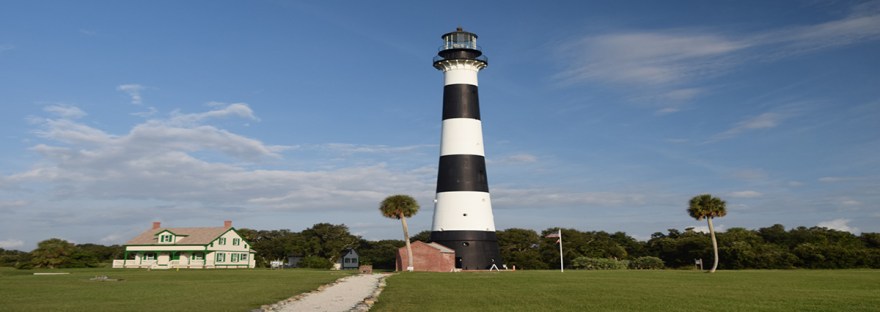
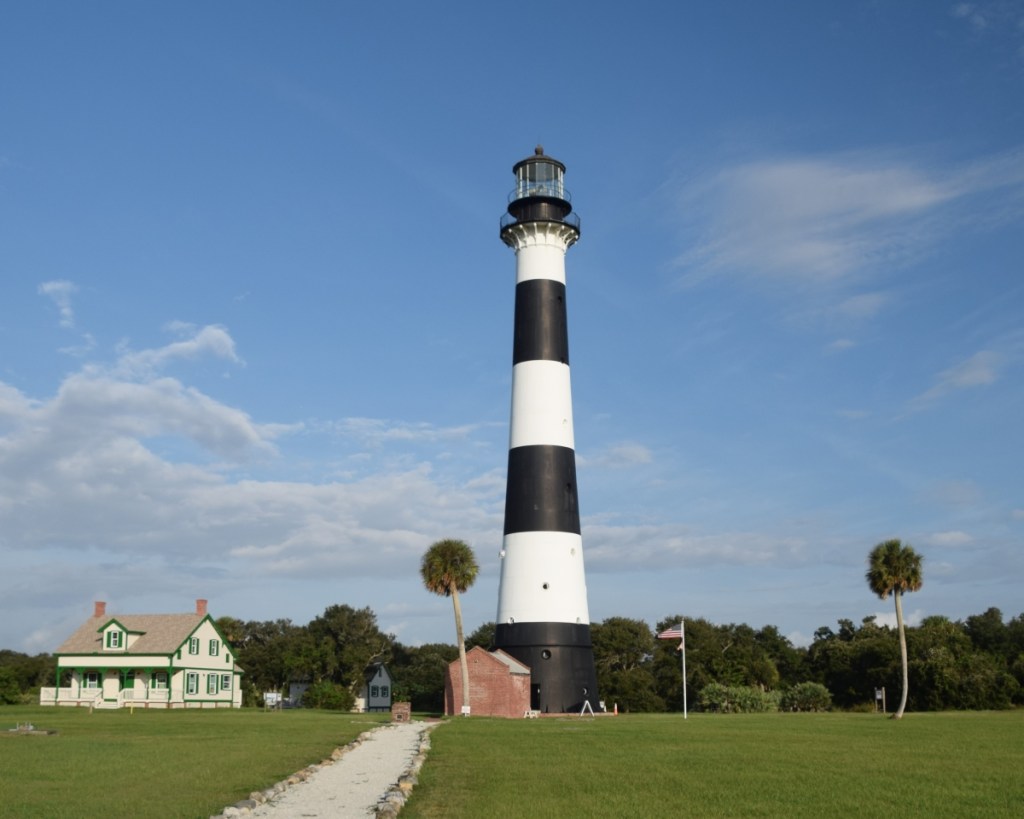
The Cape Canaveral Lighthouse is located on Cape Canaveral Space Force Station. The only way to access the lighthouse is via Cape Canaveral Tours as they have a special deal with the Cape Canaveral Space Force Base where the lighthouse sits. The lighthouse itself is very well preserved, as are some of the buildings around it. The replica of the Keeper’s house is a nice little museum and gift shop.
Advance reservations are required. Climbing the lighthouse is limited to the 5th level for small tours and the 3rd level for large tours & exit the outside stairwell from the 3rd floor, weather permitting. Closed-toed shoes are required, and you must be 48″ tall to climb. Visit Canaverallight.org for more information.
The museum and public restrooms are fully equipped to be handicapped accessible, ensuring that all visitors have the opportunity to enjoy the exhibits and facilities without barriers. However, it’s important to note that the lighthouse, unfortunately, does not currently have the same level of accessibility. Service animals are welcomed at the lighthouse, although they are restricted from accompanying visitors above the 1st level. These measures are in place to ensure the safety and comfort of all visitors, including those with disabilities or who rely on the assistance of service animals.


Since the lighthouse is located on Cape Canaveral Space Force Station, visitors must take one of the many tours offered to visit this wonderful lighthouse, museum and gift shop. Canaveral Tours offers a 4-hour tour which also includes visits to historic spaceflight complexes, spaceflight museum & views of current launch complexes and programs that are our next step into space, the moon and mars. More info at CanaveralLighthouse.tours. Currently, only U.S. Citizens are allowed to tour the lighthouse and the Cape Canaveral Space Force Station due to Department of Defense restrictions on military installations world-wide.
The Cape Canaveral Lighthouse was built, in part, to warn mariners of shoals that extend east from the cape. Dangerous shoals off the coast at Cape Canaveral were a constant threat to mariners and the need for a lighthouse was recognized by the Federal Government. The present Cape Canaveral lighthouse was not the first to be built on the cape. The original was a 65-foot brick tower including a ten-foot lantern room, was constructed in 1848. The light was a chandelier holding fifteen Winslow Lewis lamps on twenty-one-inch reflectors. The fuel was whale oil. Due to the shortness of the tower and the inadequacies of the lanterns, the problem of the dangerous shoals was not solved.


As one captain remarked, “the lights on Hatteras, Lookout, Canaveral and Cape Florida, if not improved, had better be dispensed with, as the navigator is apt to run ashore looking for them.” The captain’s opinion and complaints by mariners led Congress to vote for funds for a new lighthouse at Cape Canaveral in 1859. It was to be made of cast iron by a foundry in Cold Spring, New York. Cast iron was a popular material for lighthouses from the 1840s into the 1880s. Although work began at the foundry, the onset of the Civil War postponed construction until after the War.
After the war, work began on the new lighthouse. This unique tower was composed of metal plates with a brick lining and was erected not far from the original lighthouse. The first three levels of the new tower were designed as living quarters and consisted of a kitchen, living room, and bedrooms. The exterior staircase at the base of the tower allowed a keeper to access the top of the tower without having to go through the living area.


Historical Information
- Station Established: 1848
- Year Current Tower(s) First Lit: 1868
- Operational: Yes
- Automated: 1960
- Foundation Materials: Brick
- Construction Materials: Cast Iron Plate with Brick Lining
- Tower Shape: Conical
- Markings/Pattern: Black and White Band, Black Lantern Room
- Original Lens: First Order Fresnel
- In 1847 a 60-foot brick lighthouse was built near the site of the current light. The light was too short and ineffective as an aid for mariners.
- Construction began on the current tower but had to be halted during the Civil War. It is said that the keeper removed the light apparatus and buried it in his orange grove. Construction resumed at the end of the war and was completed in 1868.
- The new tower was 151 feet tall and contained a 1st Order Fresnel Lens. It was visible for 18 miles.
- Shore erosion was a problem and by the 1880s the light was just 70 feet from the water. In 1892, relocation began on the light. It took 18 months to complete.
- In 1960 the light was automated. The lens was removed. It is on display at the Ponce de Leon Lighthouse museum.
- The light is an active aid to navigation but is not open to the public. Ownership of the light has been transferred from the Coast Guard to the United States Space Force.
Cast iron lighthouses have a fascinating history and unique design that sets them apart from other structures. The method of assembling the lighthouse using panels that can be bolted together on site or dismantled and reassembled gives them a distinct construction process. Additionally, the use of bolts to secure the lower set of panels to a cement foundation showcases the engineering ingenuity behind these structures.
One of the most interesting aspects of cast iron lighthouses is their ability to sway in the wind, which is significantly different from solid masonry towers. This characteristic led to the decision to line the tower with bricks, providing stability and strength to withstand the forces of nature. Being a seaside lighthouse, the entrance was three levels above the ground. (In 1930 another entrance was cut on the ground level to allow the installation of generators when the light was electrified).
All levels of the interior are accessed by a cast iron, spiral staircase. Probably to facilitate assembling, the different levels of the staircase were numbered with Roman numerals. Another striking detail is the circular windows set in iron rope frames, showcasing the level of craftsmanship and intricate design that went into creating these lighthouses. These unique characteristics contribute to the enduring appeal and allure of cast iron lighthouses as iconic maritime structures.


 The Disabled Traveler