
Ponce Inlet, Florida
Step inside the white picket fence and journey back in time. Operated by the Ponce de Leon Inlet Lighthouse Preservation Association, this beautifully maintained facility is one of the best-preserved and most authentic historic light stations in the country. Visitors will find that the Ponce Inlet Lighthouse and Museum offers a wealth of sights, sounds, and experiences for all ages.
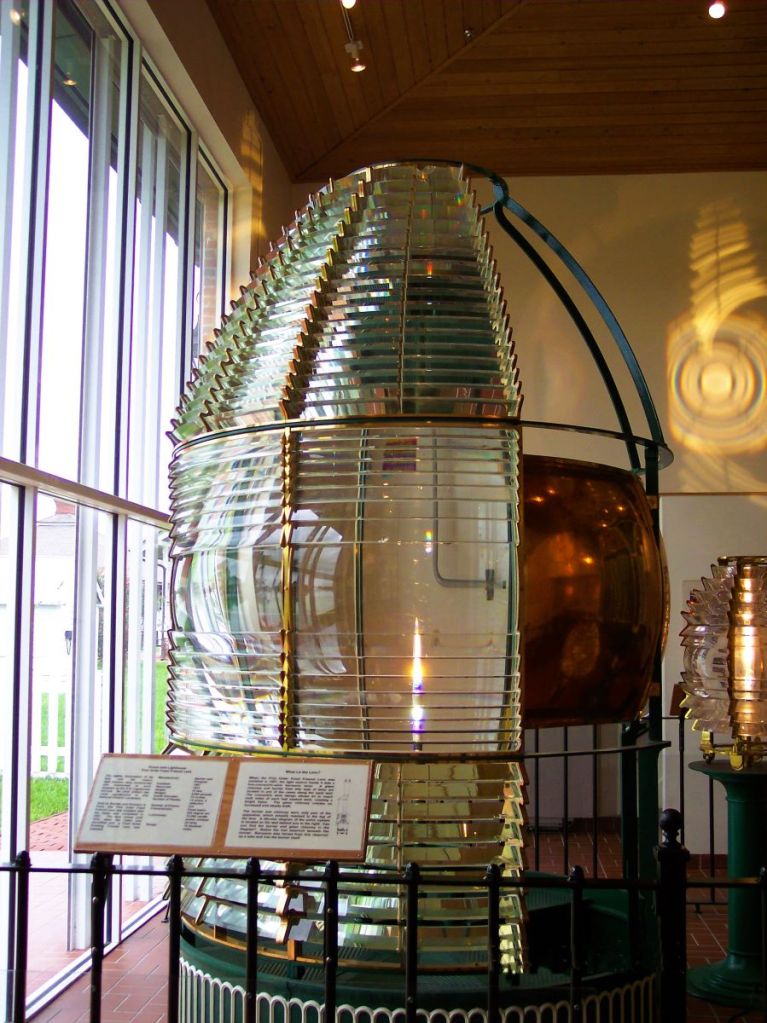
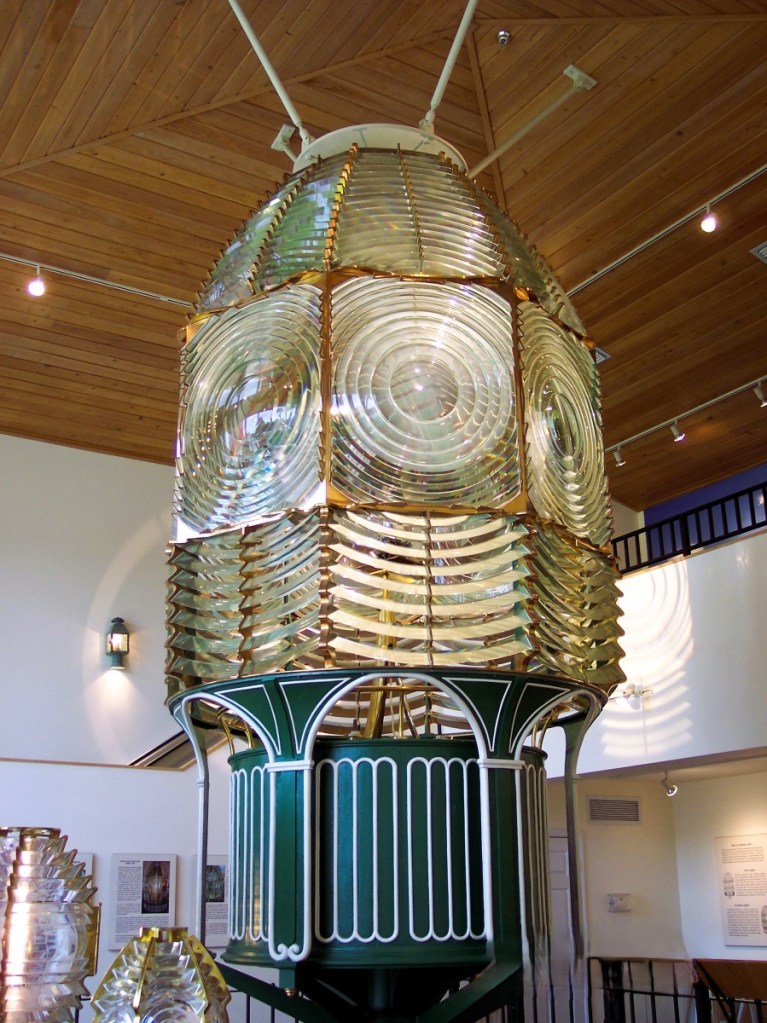
The Ponce De Leon Inlet Lighthouse is the second tallest brick lighthouse in the U.S., standing as a replacement for a 45-foot old-style brick tower. The extensive lighthouse museum features three original keeper’s houses, a pump house, and an oil house. On display are the original 1st order Fresnel lens (1887-1933) and Cape Canaveral’s original 1st order Fresnel lens (1860).
Located ten miles south of Daytona on the World’s Most Famous Beach, the Ponce de Leon Inlet Lighthouse and Museum is less than an hour away from Orlando, Saint Augustine, and Cocoa Beach, making it an ideal destination for Central Florida residents and tourists alike! For the Disabled Traveler, there’s a lot to see, and you can take in as much or as little as you like. There are several historical buildings on the property filled with artifacts and displays. A larger building showcases generations of lenses and lights from different parts of the world. The highlight is, of course, the lighthouse. For the Disabled Traveler with limited mobility, the climb is very manageable despite the 203 steps, thanks to regular landings that allow you to take things at your own pace. The view at the top is stunning, even on cloudy days. The gift shop offers a broad range of items with something for everyone at very reasonable prices.


Handicapped parking spaces are located in the lower parking lot directly in front of the main entrance and gift shop for the Disabled Traveler. A wheelchair ramp provides access to the Admissions & Gift Shop facility on the south end of the porch. All restrooms are accessible. Brick walkways connect all the light station’s publicly accessible historic structures. The light station’s publicly accessible buildings are wheelchair accessible. Ramps are installed on all three keeper dwellings, as well as the Woodshed Theater and Gift Shop. Ramps are not needed to access the Restroom Building, Cuban Raft Exhibit Area, Tool Shed/Radio Room Building, Ayres Davies Lens Exhibit Building, or Oil Storage House.
In the Ayers Davies Lens Exhibit Building, two stairways provide direct access to the second-floor observation platform. Disabled access to the upper area is provided via a wheelchair lift located in the east stairwell. A mural of the view looking south from the top of the lighthouse is featured on the second level to provide those who cannot climb the tower the opportunity to see what it is like.
The lighthouse itself is not wheelchair accessible. Visitors must climb 203 steps to reach the top of the lighthouse. Both the granite steps leading into the tower and the spiral staircase leading to the top feature handrails. Landings are located every 21 steps for those who need to rest. Coming down, the stairs are steep and a little scary.
The lighthouse and its grounds are beautifully maintained, making it a delightful and budget-friendly destination with a minimal entrance fee. There’s so much to explore and learn even before reaching the lighthouse itself. You start with a video that explains the area’s history during the war and the lighthouse’s origins. You can walk through exhibits that showcase life from that era and see various lenses used over the years. If you can climb the 203-step spiral staircase to the top, you’ll be rewarded with an amazing view of the entire area and the inlet!
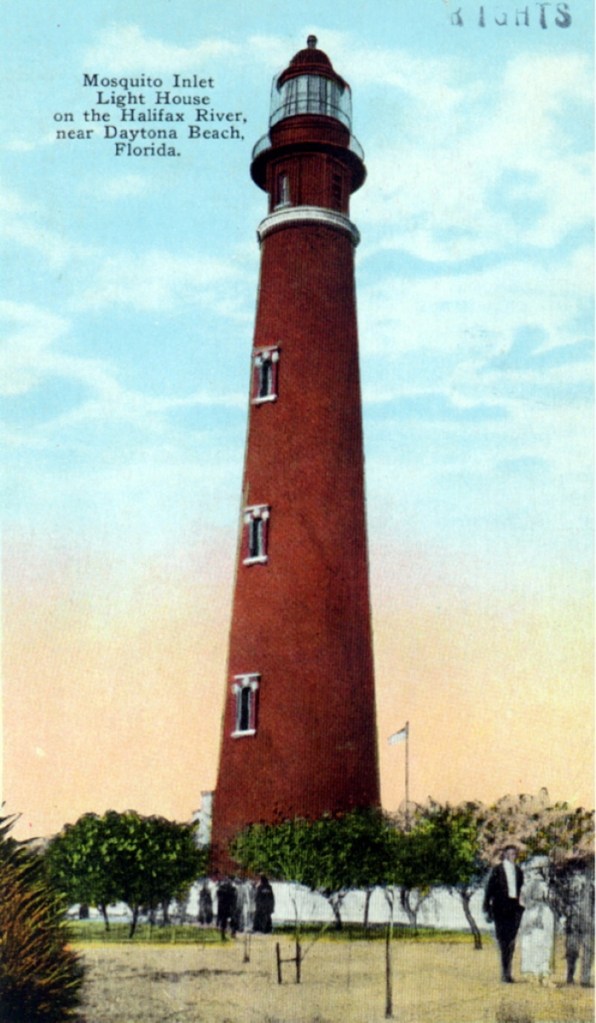


- Location: The Ponce de Leon Inlet Lighthouse is located at Ponce Inlet, FL at the end of the peninsula.
- Latitude: N 29.08063 Longitude: W 80.92806
- Year Constructed: 1887 (Francis H. Smith) Active (Private)
- Tower Height: 175 feet Focal Plane: 165 feet
- Brick tower painted bright red; lantern painted black; 3rd order Fresnel lens (in use 1933-1970 and since 2004).
HISTORY: In 1830, plantation and ship owners from Mosquito County informed Congress that they were experiencing significant difficulties in trade due to the absence of a lighthouse at Mosquito Inlet. Congress authorized the construction of a lighthouse, and by the end of February 1835, a 45-foot conical brick tower and a dwelling were hastily completed. However, during a violent storm in October 1835, the dwelling was washed into the inlet, and the foundation of the tower was undermined. The lighthouse eventually collapsed in April 1836.
On February 8, 1847, a resolution was presented to Congress requesting a new lighthouse for Mosquito Inlet. However, this request was not acted upon, and the matter was not revisited until after the Civil War. The Lighthouse Board’s annual report of 1870 noted that the level of commerce passing through Mosquito Inlet alone did not justify a major light. However, since the inlet was located roughly at the center of the 110-mile stretch of unlit coastline between the St. Augustine and Cape Canaveral Lighthouses, a lighthouse at the inlet that would serve as both a coastal and harbor light was deemed necessary.


Construction of the new lighthouse began in 1884 and was completed in 1887. Over a million bricks were used to build the lighthouse, which reached a height of 175 feet from the ground to the tip of the lightning rod. The structure is supported by a brick foundation extending twelve feet below ground and consists of an inner and outer wall connected by spoke-like interstitial walls. The outer wall tapers as it rises, while the inner wall maintains a constant twelve-foot diameter, allowing space for the 194-step circular stairway. Upon completion, a first-order Fresnel lens, made in 1867 by the Parisian firm Barbier and Fenestre, was installed in the lantern room. This lens was unique because the landward side featured three concave reflecting panels. The lighthouse’s light was first exhibited on November 1, 1887.
It’s interesting how a name can influence the development of a place! The change from Mosquito Inlet to Ponce de Leon Inlet in 1926 certainly made the area more appealing. Naming it after the famous explorer Ponce de Leon not only honored his legacy but also likely helped attract more settlers and visitors. The lighthouse, now known as the Ponce de Leon Inlet Lighthouse, stands as a historical landmark reflecting this change.

The Ponce de Leon Inlet Lighthouse was electrified in 1933, replacing its first-order Fresnel lens with a third-order lens from the discontinued Sapelo Lighthouse in Georgia. The Coast Guard took over the lighthouse in 1939, maintaining a crew there until it was fully automated in 1953.
The Ponce de Leon Inlet Lighthouse is considered one of the finest light stations in the United States and is well worth an extended visit. The dwellings now feature exhibits about the lighthouse keepers and their families. Even the modern redbrick gift shop holds historical significance, as it was built using plans for a multi-family dwelling that was never constructed. A lens exhibit building, constructed on-site in 1995, houses the revolving first-order lens from Cape Canaveral Lighthouse. In 2003, the fixed first-order lens originally used in the Ponce de Leon Lighthouse was also placed on display after being returned by Mystic Seaport. The station’s historical value continues to grow thanks to the tireless efforts of the preservation association.
Historical Information
- Station Established: 1835
- Year Current Tower(s) First Lit: 1887
- Operational? YES
- Automated? YES 1953
- Deactivated: 1970-1982
- Foundation Materials: BRICK
- Construction Materials: BRICK
- Tower Height: 175 feet
- Tower Shape: CONICAL
- Markings/Pattern: RED W/BLACK LANTERN, COPPER ROOF
- Original Lens: First Order Fresnel, 1887
- 1834, June 30: Congress appropriated $11,000 for the lighthouse to be built.
- 1835, February: Winslow Lewis completed the original 45-foot tall tower, at a cost of $7494. The lighthouse was complete with 15 16-inch parabolic reflectors. William H. Williams was selected as the keeper. Oil never arrived and the lighthouse was never lit. This light was known as the Mosquito Inlet Lighthouse named for the local town.
- 1835, October: A hurricane washed away the keeper’s quarters and caused the lighthouse to lean.
- 1835, December 26: Seminole Indians attacked the lighthouse, smashing all the glass in the lantern and setting fire to its wooden stairs. The area was abandoned.
- 1836, April: Without repairs, the lighthouse was left to fall into the sea.
- 1883, March 21: Ten acres of land was purchased for a new lighthouse designed by Francis Hopkinson Smith.
- 1887, November 1: The new light (with a first order fixed Fresnel lens) was lit by keeper William Rowlinski.
- 1909: An incandescent oil vapor lamp replaced the kerosene lamp.
- 1925: Electricity was installed in the keeper’s quarters via a generator. Previously a windmill provided power.
- 1927: The town of Mosquito Inlet changed its name to Ponce de Leon Inlet.
- 1933, August: The light in the tower was electrified with a 500-watt lamp. The First order lens was replaced with a third order revolving lens.
- 1939: The lighthouse was transferred to the Coast Guard.
- 1953: The lighthouse was completely automated.
- 1970: The US Coast Guard abandoned the station.
- 1972: The light was deeded to the town of Ponce Inlet. The Ponce de Leon Inlet Lighthouse Preservation Association was founded to assist the town with the restoration and management of the light station. The lighthouse was listed on the National Register of Historic Places.
- 1982: The light was restored to active service.
- 1995: A lens exhibit building was constructed on-site.
- 2000 – 2001: Extensive renovations including the repainting of the tower and restoring the lantern room to its original look were completed.
- 2002: The lighthouse and keeper’s quarters are open to the public for touring. The keeper’s quarters house an extensive museum collection of lighthouse, sea and local history.
- 2003: The original fixed first-order lens was also placed on display.
Ponce De Leon Inlet Lighthouse & Museum

 The Disabled Traveler